


There are topics that look simple from a distance, and immersive walking trails is one of them. People often assume the appeal comes from visual novelty alone, yet the deeper draw is the way it gathers visitors, designers, and destination teams into the same tempo inside forest routes, lakeside paths, and garden corridors. When the setting carries turning gravel, layered birdsong, hidden lanterns, and damp bark, the experience stops behaving like content and starts acting like a shared memory in progress.
That shift matters because revealing every highlight too early has trained people to scan past meaningful moments before they fully register what is happening. A well-shaped experience slows attention down just enough for people to notice gesture, atmosphere, and sequence. Once that happens, the relationship between pacing and discovery becomes visible in practical terms rather than as a vague cultural slogan.
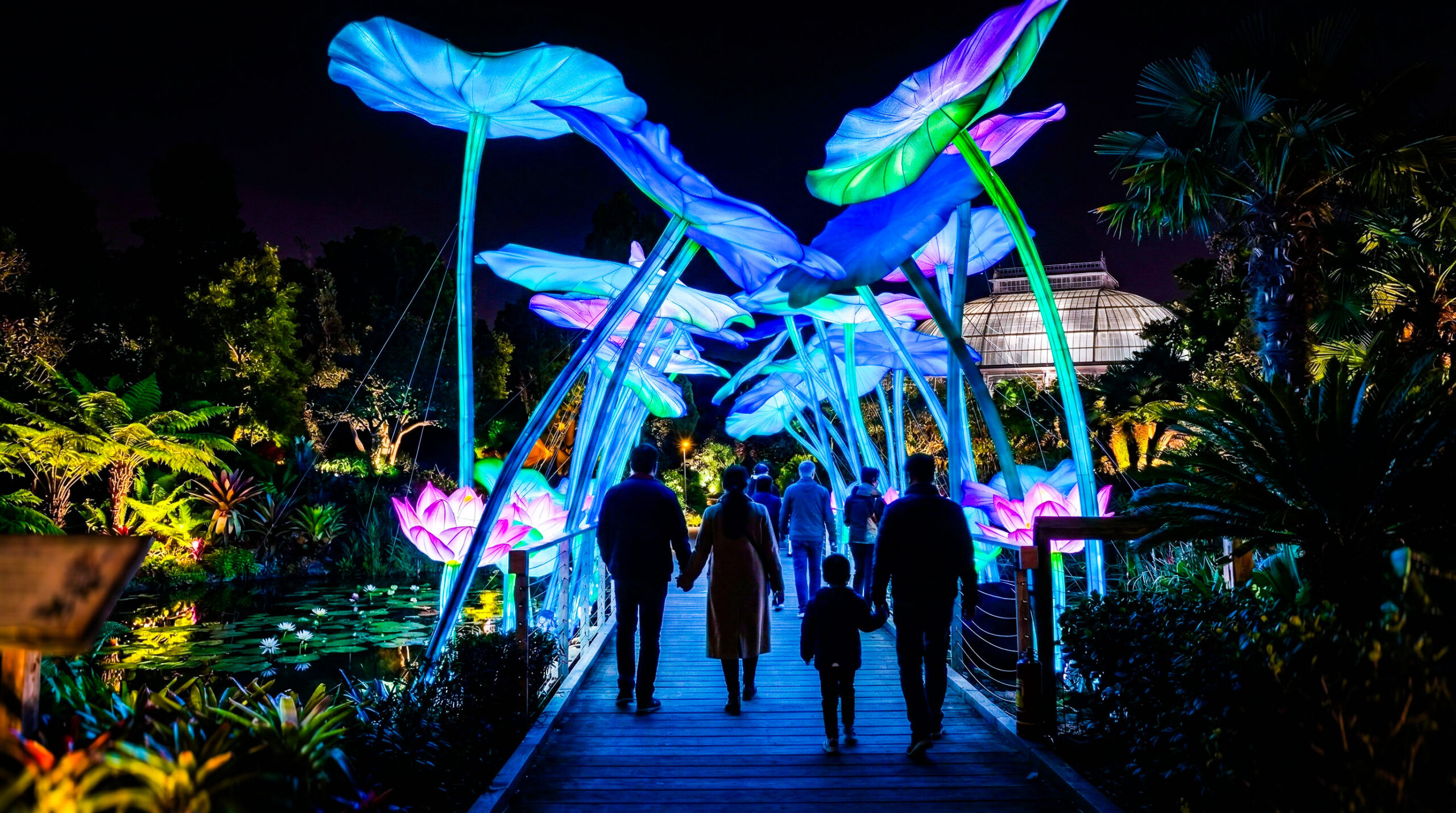
The Scene and the Stakes
The first useful question is not whether an experience looks impressive, but whether it creates the right emotional conditions for attention. In forest routes, lakeside paths, and garden corridors, people do not arrive as blank slates; they bring fatigue, anticipation, private concerns, and different ideas of what a good evening should feel like. A strong version of immersive walking trails acknowledges those realities instead of fighting them, which is why the opening moments matter more than most schedules suggest.
Visual beauty helps, but beauty alone rarely produces loyalty. What produces loyalty is the feeling that someone considered how a real person would move through the space, where they would pause, what they would hear, and how quickly their senses would fill. That is the difference between a decorative setup and an experience that naturally delivers a journey that stays engaging from start to finish.
A Human Detail That Changes Everything
A human detail often does the heaviest lifting. It may be the volunteer who gives direction without rushing, the bench positioned where conversation naturally extends, or the lighting cue that lets the eye adjust before the next reveal. Those details are small enough to be missed in a planning deck and powerful enough to determine whether people feel invited or merely managed.
When organizers understand this, they stop asking how to add more and start asking how to sequence what already exists. That shift reduces noise, protects mystery, and leaves room for the audience to participate with their own curiosity. It also keeps the relationship between pacing and discovery grounded in observable behavior rather than abstract branding language.
How the Practice Takes Shape
Every memorable format develops through repeated choices about rhythm. That is true whether the building blocks are performances, pathways, vendor placements, crafted objects, or conversation points spread through the site. The point is not constant stimulation, but a pattern of tension and release that allows the experience to breathe.
Materials shape that rhythm in obvious and subtle ways. When a setting includes turning gravel, layered birdsong, hidden lanterns, and damp bark, people read the environment through more than sight, and that multiplies the sense of presence. It is one reason carefully chosen materials outperform generic spectacle even when the total production budget is smaller.
Materials, Rhythm, and the Value of Restraint
Restraint also matters because audiences become numb when every surface competes for attention. In the strongest examples of immersive walking trails, some areas are intentionally quiet, some transitions are intentionally gentle, and some reveals are delayed until the visitor has earned them through movement. That design discipline creates contrast, and contrast is what turns a walk into a story.
Teams that respect rhythm usually end up with more usable insight after the event as well. They can identify where people lingered, what sparked photos or conversation, and which points encouraged repeat circulation. Those observations are far more actionable than broad reactions like nice lighting or good turnout.
What Visitors Notice First
Visitors rarely articulate their first impressions in technical language, but they notice care immediately. Care appears in the clarity of arrival, the absence of confusion, the steadiness of sound levels, and the way pathways help people choose without feeling pushed. In other words, comfort is often the first design achievement, even when excitement gets more public credit.
This is especially relevant for visitors, designers, and destination teams, because mixed groups process environments at different speeds. Some members want to move ahead quickly, others want context, and some need a moment to settle before they enjoy anything at all. A thoughtful experience allows those differences to coexist instead of forcing everyone into a single tempo.
Small Signals of Care
Small signals of care often travel farther than headline attractions. A clean sightline, a well-placed resting point, and a piece of copy that sets expectations honestly can stabilize the mood of an entire evening. People may not remember each of those components explicitly, but they remember the feeling produced by their combination.
That feeling is the foundation for a journey that stays engaging from start to finish. Once people sense that the environment respects their time and attention, they become more open to storytelling, food, music, craft, or conversation. The event begins to feel coherent, which is one of the most underrated forms of hospitality.
Where the Real Meaning Appears
Meaning usually appears after the initial novelty fades. Once the eye adjusts and the audience understands the basic format, deeper questions start to surface about who made this, why this sequence exists, and what the experience wants to communicate over time. That is the moment when a well-prepared story can transform passive attendance into active interpretation.
Stories work best when they are embedded in choice rather than dumped as exposition. A route can suggest a narrative arc, a material can hint at continuity, and a recurring motif can connect different parts of the night without requiring a lecture. The goal is to let people discover significance at the pace of their own attention.
Stories Beneath the Surface
This is where the relationship between pacing and discovery matters most. The audience does not need to use that exact phrase, but they do need to feel its truth in the body: in how they slow down, where they look, whom they speak with, and what they mention on the way home. If the meaning stays trapped in the organizer's notes, then the experience has not fully landed.
Depth also protects against interchangeability. Many events can provide food, lights, music, or activity, but not every event can make those ingredients feel linked to a clear identity. When meaning is visible, people stop comparing only features and start remembering character.
Turning Experience into Community
Community is not produced by proximity alone. People can stand in the same place and still remain socially distant if the environment gives them no reason to interact beyond logistics. The best versions of immersive walking trails create moments where interaction feels natural, useful, and proportionate to the setting.
Participation does not have to be loud to be meaningful. It may look like choosing a path together, sharing food, comparing memories, asking a staff member a question, or returning to the same installation at a different point in the night. Those repeated, low-pressure acts are how strangers become temporary peers and groups become more aware of one another.
Rituals That Invite Participation
Ritual is especially effective because it lowers social risk. When people understand what usually happens next, they can join with less hesitation, and that confidence expands the social field around them. Repeated gestures, recurring sounds, and familiar cues are not boring when they help people participate more fully.
Over time, those rituals reinforce a journey that stays engaging from start to finish. They give repeat visitors a sense of return, first-time visitors a clear entry point, and organizers a reliable structure on which to build variation. That balance between familiarity and freshness is harder to achieve than visual novelty, but it creates longer cultural life.
Lessons for Modern Teams and Families
The practical lesson is broader than any single event format. Whether someone is designing a public program, planning a weekend, hosting a team gathering, or shaping a family outing, the same principle applies: pace determines perception. People remember what they had enough time to feel, not just what they had enough time to see.
That insight is increasingly useful because revealing every highlight too early keeps encouraging shallow consumption. When every platform rewards speed, the rare environments that protect attention become more valuable, not less. They offer relief from fragmentation and prove that slowness can be strategically designed rather than accidentally nostalgic.
What to Carry Forward
Teams can apply this by reducing needless transitions, clarifying expectations, and leaving margin where emotion should gather. Families can apply it by choosing fewer destinations, staying longer in each one, and noticing which moments prompt real conversation instead of just photographs. In both cases, the point is to trade volume for meaning.
That is why immersive walking trails remains relevant beyond its immediate setting. It demonstrates that atmosphere, sequence, and care can still compete with distraction when they are assembled with conviction. More importantly, it shows that memorable experiences are rarely built from abundance alone; they are built from well-timed human attention.
Closing Reflection
A dummy article still needs enough realism to test typography, spacing, archive cards, and content rhythm with honesty. That is why long-form structure matters here: it exposes how the blog handles headings, images, paragraphs, scannability, and momentum over time. If a layout can hold a piece like this with clarity, it will usually handle shorter posts with even more confidence.
For that reason, Designing a Trail That Rewards Curiosity is not only filler content. It is a working stand-in for the kind of reflective, experience-led editorial that asks readers to stay a little longer. And when a page can support that kind of reading without friction, the design is much closer to ready.
An additional note strengthens the long-form cadence of this piece without changing its direction. The same ideas continue to apply in forest routes, lakeside paths, and garden corridors, where visitors, designers, and destination teams respond most positively when sequence, atmosphere, and meaning reinforce one another. That sustained consistency is what keeps immersive walking trails from feeling disposable and what makes a journey that stays engaging from start to finish easier to notice in real behavior.
An additional note strengthens the long-form cadence of this piece without changing its direction. The same ideas continue to apply in forest routes, lakeside paths, and garden corridors, where visitors, designers, and destination teams respond most positively when sequence, atmosphere, and meaning reinforce one another. That sustained consistency is what keeps immersive walking trails from feeling disposable and what makes a journey that stays engaging from start to finish easier to notice in real behavior.
An additional note strengthens the long-form cadence of this piece without changing its direction. The same ideas continue to apply in forest routes, lakeside paths, and garden corridors, where visitors, designers, and destination teams respond most positively when sequence, atmosphere, and meaning reinforce one another. That sustained consistency is what keeps immersive walking trails from feeling disposable and what makes a journey that stays engaging from start to finish easier to notice in real behavior.
An additional note strengthens the long-form cadence of this piece without changing its direction. The same ideas continue to apply in forest routes, lakeside paths, and garden corridors, where visitors, designers, and destination teams respond most positively when sequence, atmosphere, and meaning reinforce one another. That sustained consistency is what keeps immersive walking trails from feeling disposable and what makes a journey that stays engaging from start to finish easier to notice in real behavior.
An additional note strengthens the long-form cadence of this piece without changing its direction. The same ideas continue to apply in forest routes, lakeside paths, and garden corridors, where visitors, designers, and destination teams respond most positively when sequence, atmosphere, and meaning reinforce one another. That sustained consistency is what keeps immersive walking trails from feeling disposable and what makes a journey that stays engaging from start to finish easier to notice in real behavior.
An additional note strengthens the long-form cadence of this piece without changing its direction. The same ideas continue to apply in forest routes, lakeside paths, and garden corridors, where visitors, designers, and destination teams respond most positively when sequence, atmosphere, and meaning reinforce one another. That sustained consistency is what keeps immersive walking trails from feeling disposable and what makes a journey that stays engaging from start to finish easier to notice in real behavior.
An additional note strengthens the long-form cadence of this piece without changing its direction. The same ideas continue to apply in forest routes, lakeside paths, and garden corridors, where visitors, designers, and destination teams respond most positively when sequence, atmosphere, and meaning reinforce one another. That sustained consistency is what keeps immersive walking trails from feeling disposable and what makes a journey that stays engaging from start to finish easier to notice in real behavior.